

Stone has accompanied people for thousands of years. They built their first dwellings with it, and today we also use it in modern architecture.
It is one of the most important materials for building and design.
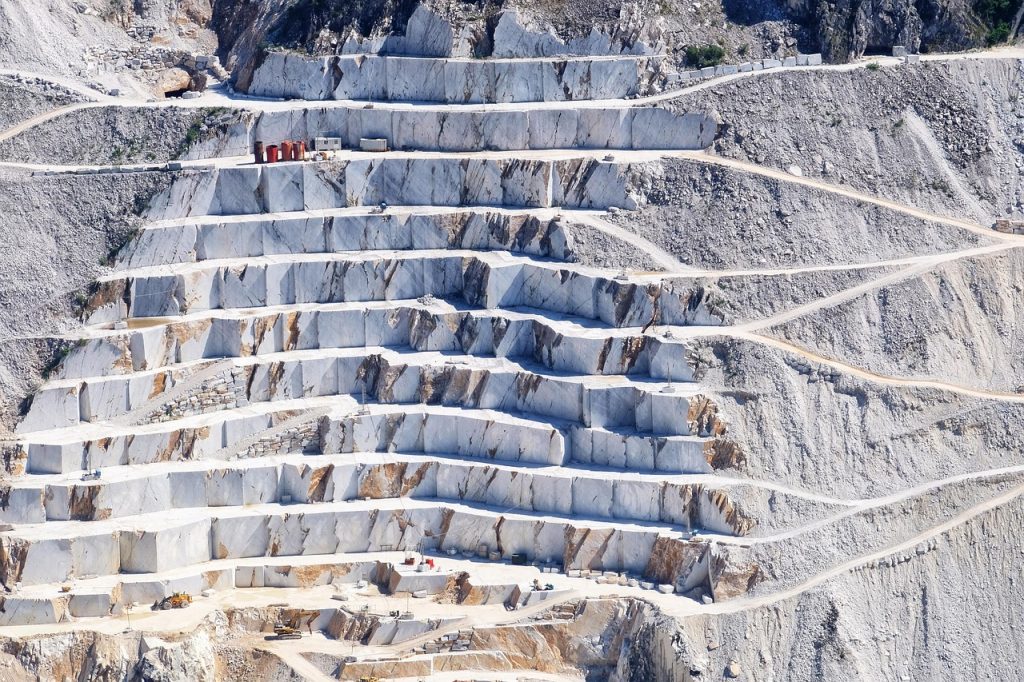
There are two kinds: Natural stone, which is extracted directly from nature, and quartz composite, which is made using special technical processes.
Both have advantages and disadvantages and differ considerably in some properties.
Natural stone
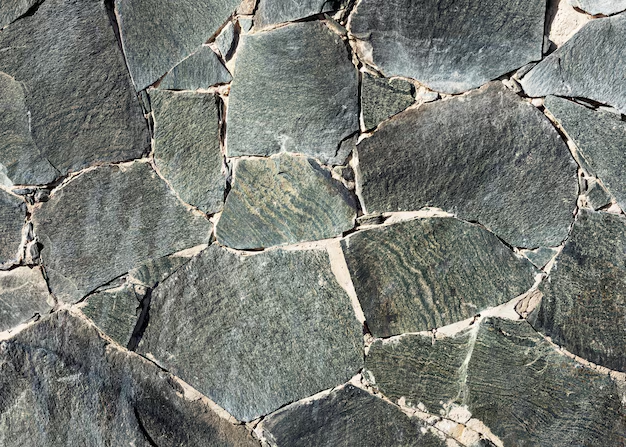
The most common natural stones include granite, marble, limestone, sandstone and slate.
Some advantages of natural stone:
- Every piece of natural stone is one of a kind, with its own pattern and texture.
- It is unaffected by all kinds of stains and mould.
- It is very easy to clean and care for. A soft cloth and water are enough.
- It conducts heat excellently.
- It is available in many colours, patterns and formats.
- It is an environmentally friendly natural material without harmful chemicals.
- Thanks to its versatility and weather resistance, it is suitable for indoors and outdoors.
- Its natural look has great aesthetic value and brings warmth and cosiness into the room.
Quartz composite
How is it made?
Quartz composite is an engineered material made from natural stone and an artificial binder, usually resin. Pigments and fillers such as crushed glass or shells can also be added during production, creating very special stones that do not exist in nature.
Quartz composite is a technically optimised product made of 93% natural quartz and 7% resin and pigments. It is made by vibro-compaction under vacuum.
Very popular is engineered marble. It is often of higher quality than real marble, because it absorbs neither grease nor other dirt.
Some advantages of quartz composite:
- It is resistant to high temperatures and UV rays. You can put hot pans down without worry.
- It is hard-wearing and highly resistant to scratches, impact and stains from wine, coffee and more.

- Quartz composite is non-flammable and, very importantly, never changes colour.
- It is available in XXL formats. From a single piece you can make a whole kitchen worktop or clad a whole living room wall.
- It is antibacterial, because it has no pores and no dirt can penetrate.
Natural stone and quartz composite compared
Both offer excellent solutions, but differ on important points.
- Natural stone is hard, hard-wearing and heat-resistant, but often absorbent and sensitive to acids, so it needs regular cleaning and possibly sealing. Quartz composite has no pores and is therefore less prone to staining. That matters especially in kitchens and bathrooms, where things are spilt more often.
- Natural stone is the clear winner on environmental friendliness. It is a natural material without chemical additives. The production of quartz composite, by contrast, has a larger carbon footprint, mainly because of the resins.
- Price differences can also be large. Natural stone can be cheap (local limestone) or quite expensive (certain types of marble). The price of quartz composite is much more stable.
Natural stone and quartz composite both offer many advantages. Natural stone delights with its uniqueness and refined look, quartz composite with its practicality and easy care.